Subfloor microclimates in coastal South Carolina operate under continuous relative humidity above 75 percent between April and October. In historic pier-and-beam structures throughout Harleston Village, South of Broad,…
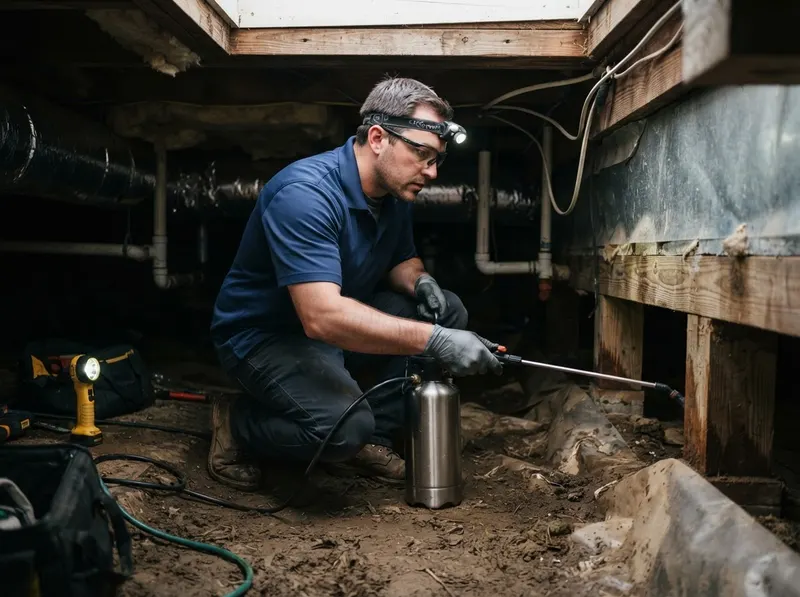
Subfloor microclimates in coastal South Carolina operate under continuous relative humidity above 75 percent between April and October. In historic pier-and-beam structures throughout Harleston Village, South of Broad, and Hampton Park Terrace, ambient vapor penetrates unsealed earth foundations. When structural framing timber registers moisture contents exceeding 20 percent, wood fibers soften, allowing subterranean termites and powderpost beetles to establish colonies within sill plates and floor joists. Traditional baseboard spray applications inside finished rooms fail to suppress these populations because the reproductive core remains sustained by subsoil dampness beneath the living quarters.
Remediation protocols require an architectural evaluation of ground vapor transmission and foundational ventilation. Ground covers utilizing 10-mil or 12-mil reinforced polyethylene sheets stop rising damp from exposed marsh soils, while borate timber treatments diffuse into the sapwood to render cellulose indigestible to wood-destroying organisms. If crawlspace framing exhibits moisture levels above 19 percent, passive foundation vents in low-elevation zones like West Ashley and James Island pull moist marine air directly under the floorboards rather than drying them. In such structural profiles, mechanical dehumidification paired with closed vent covers stabilizes the crawlspace below the 15 percent timber moisture threshold required to halt fungal growth.
Choosing between targeted local moisture control and complete crawlspace encapsulation depends on foundation elevation, flood zone status, and standing water risk. Pier-and-beam foundations along tidal creeks near the Arthur Ravenel Jr. Bridge and Daniel Island that fall within FEMA special flood hazard areas require flood-rated, free-draining configurations rather than sealed encapsulation, because storm surge must be permitted to recede without trapping hydrostatic volume. The mechanical trade-off balances initial capital outlay against structural longevity: basic vapor barrier placement and localized borate timber applications cost less initially but require annual moisture meter monitoring, whereas closed conditioned systems demand dedicated 110-volt, 15-amp electrical circuits and routine filter maintenance to maintain ambient humidity below 55 percent.
Every job gets a firm, written price after a free on-site visit.
Tell us about your crawlspace pest and moisture treatment job in Charleston and we'll send a clear, written quote, usually the same day.
 PestDefender Pro