Stinging insect nest removal in Charleston requires calibrated methods tailored to coastal architectural features such as double piazzas, exposed rafter tails, and lath-and-plaster wall cavities. Lowcountry high…
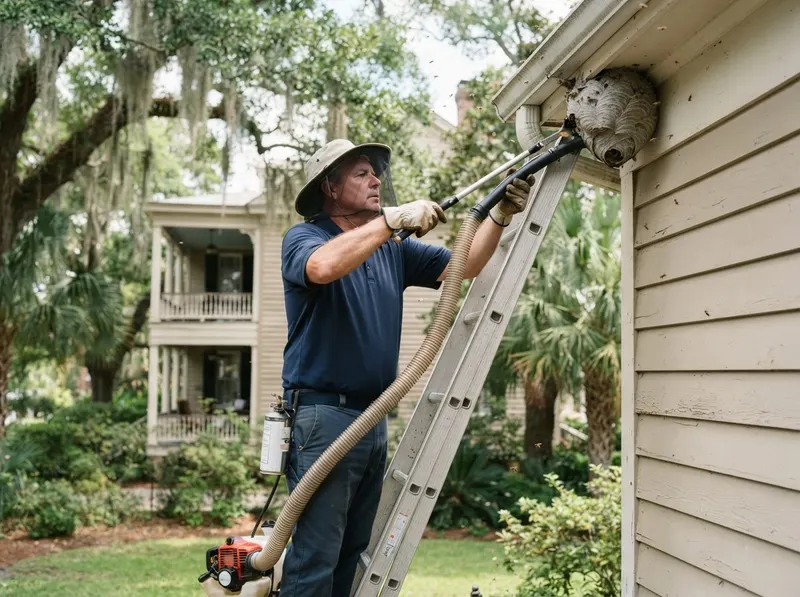
Stinging insect nest removal in Charleston requires calibrated methods tailored to coastal architectural features such as double piazzas, exposed rafter tails, and lath-and-plaster wall cavities. Lowcountry high humidity and extended thermal seasons create 8-to-10-month breeding windows that accelerate nest expansion. Paper wasps (*Polistes*) commonly anchor hexagonal paper combs inside the sheltered, south-facing porch ceilings of historic homes in South of Broad and the French Quarter, while aggressive subterranean yellow jackets construct concealed colonies containing 1,500 to 4,000 workers inside sandy, loamy soil banks along live oaks in James Island and West Ashley.
Direct physical removal fits localized exterior aerial nests, whereas deep-void structural micro-aerosol dusting fits concealed wall installations where tearing out interior historic trim or dry-erase shiplap would cause major property damage. The operational trade-off is mechanical extraction speed versus structural disruption: exposed nests beneath second-story soffits in Daniel Island or Wagener Terrace permit complete single-visit physical recovery, while subterranean colonies beneath masonry foundations or void infestations in Harleston Village brick framing require residual dust applications that neutralize foraging workers over 48 to 72 hours before cavity seal-out begins.
Execution follows an objective four-step clinical protocol:
1. Species identification, flight line tracing, and thermal camera cavity detection identify the central nesting core without opening walls.
2. Ultra-low-volume residual contact pyrethroids or non-repellent dust formulations penetrate deep within the defensive perimeter to incapacitate the colony.
3. Complete mechanical extraction detaches the central paper comb structure to prevent larval decay and downstream secondary dermestid beetle infestations.
4. Substrate enzymes deodorize the surface pheromones, followed by targeted application of hydrophobic silicone sealants across trim voids to deter secondary queens.
Every job gets a firm, written price after a free on-site visit.
Tell us about your stinging insect nest removal job in Charleston and we'll send a clear, written quote, usually the same day.
 PestDefender Pro