Formosan subterranean termites consume structural lumber up to ten times faster than native subterranean species, threatening high-value historic heart pine in Downtown Charleston, South of Broad, and Harleston…
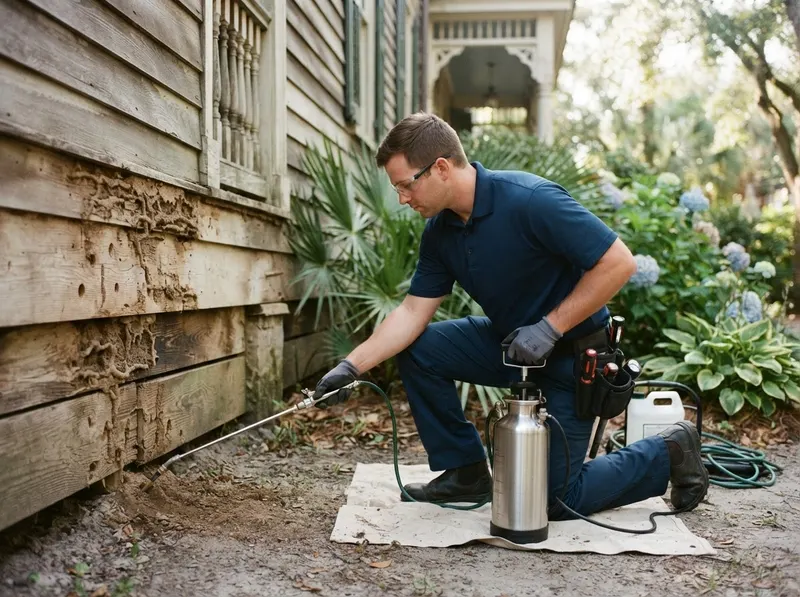
Formosan subterranean termites consume structural lumber up to ten times faster than native subterranean species, threatening high-value historic heart pine in Downtown Charleston, South of Broad, and Harleston Village. Unlike native termites that require constant soil return, Formosan colonies build independent aerial nests called carton inside damp wall cavities, sustained by coastal humidity and roof leaks common to French Quarter properties. Conventional liquid repellents fail because workers detect and circumvent the chemical barrier; effective remediation requires non-repellent termiticides such as fipronil applied at labeled volumes of 4 gallons per 10 linear feet, allowing foraging insects to transfer the active toxicant throughout the colony undetected.
Treatment selection depends directly on crawlspace foundation conditions and existing moisture loads. In low-elevation zones across West Ashley and James Island, ground clearance under timber framing often drops below 18 inches, necessitating low-pressure localized foam applications rather than broad trenching. If framing exhibits carton structures above the floor plate, technicians drill into drywall voids to inject expanding foam directly against studs; if the infestation remains ground-bound, exterior perimeter trenching or subterranean baiting systems around the foundation footer provide durable barrier integrity. The operational trade-off centers on upfront drilling through paved surfaces versus continuous exterior station monitoring: perimeter trenching creates immediate soil-level mortality, whereas perimeter bait grids require ongoing bi-monthly consumption checks but avoid penetrating historic brick or bluestone walkways on Daniel Island and Hampton Park Terrace.
1. Exterior perimeter evaluation identifies ground-to-wood contacts, crawlspace humidity levels exceeding 20%, and entry tubes along masonry piers.
2. Continuous non-repellent liquid trenches are excavated 6 inches wide by 6 inches deep along exterior foundation footers and interior foundation piers.
3. Expanding non-repellent foam fills structural wall voids containing detected carton or active galleries.
4. Subterranean monitoring stations are placed at 10-to-15-foot intervals along exterior turf perimeters to intercept foraging secondary colonies.
Every job gets a firm, written price after a free on-site visit.
Tell us about your formosan termite remediation job in Charleston and we'll send a clear, written quote, usually the same day.
 PestDefender Pro